The Laws, Ethics, and Mechanics of "Borrowing" in advertising

I am not a lawyer. Proceed at your own risk.
The mechanics of copying ads
Why copying works
Meta is a social graph, which in short means that people are clustered together by their relation to each other on the platform on any number of parameters, where one of them is almost certainly what kind of products they are likely to buy.
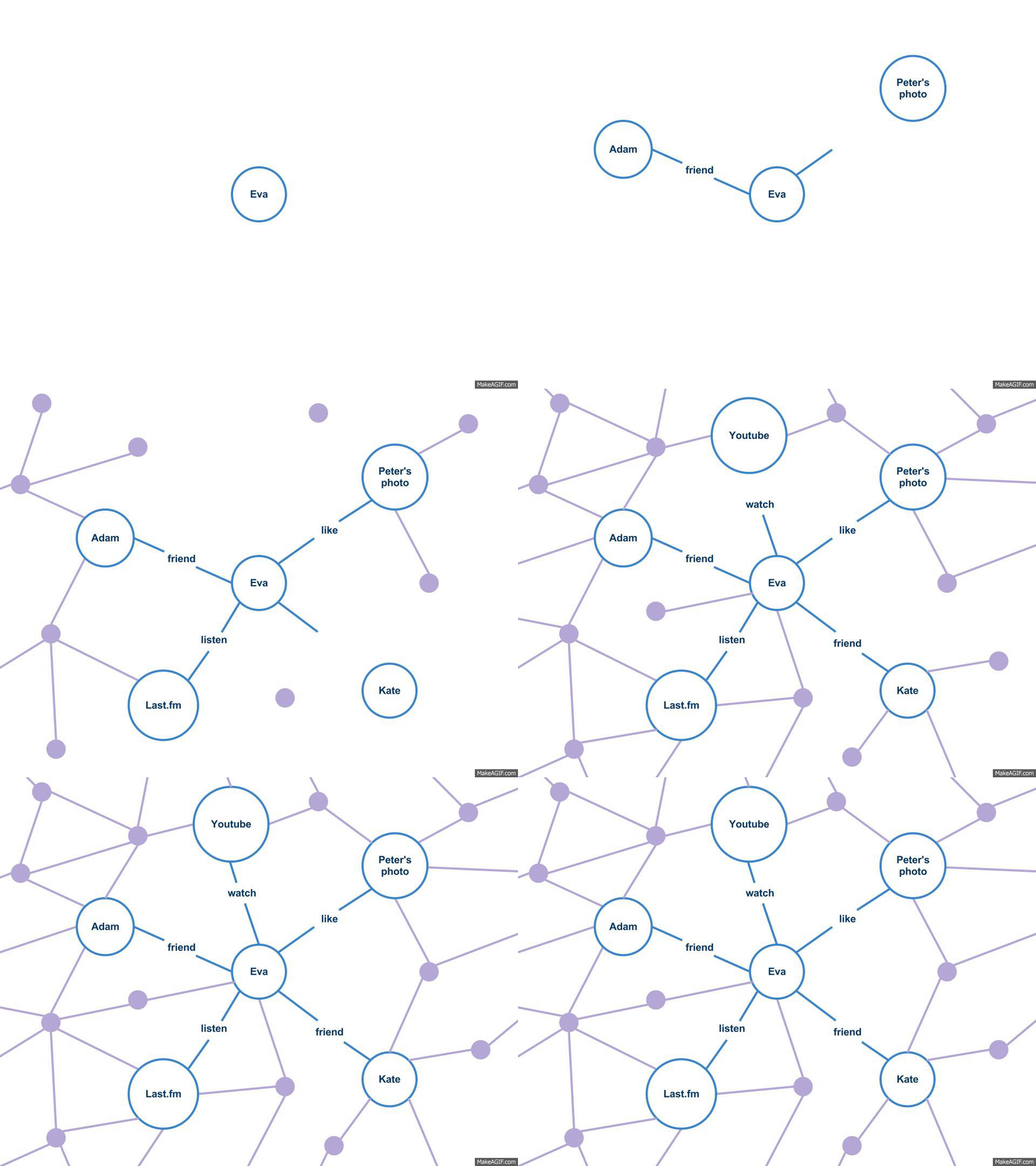
In a world where targeting controls are largely automated, you can think of the creative as an abstract targeting mechanism that navigates this graph. Using computer vision, Meta is able to look at ads on a pixel-by-pixel basis, and then predict who is most likely to convert, in a way that is largely a black box.
Hence, if you reproduce a creative with 100% accuracy, all-else-equal you will target an identical audience (assuming product similarity, and whatever unknown parameters are influencing auction selection) and are likely to experience similar unit economics.
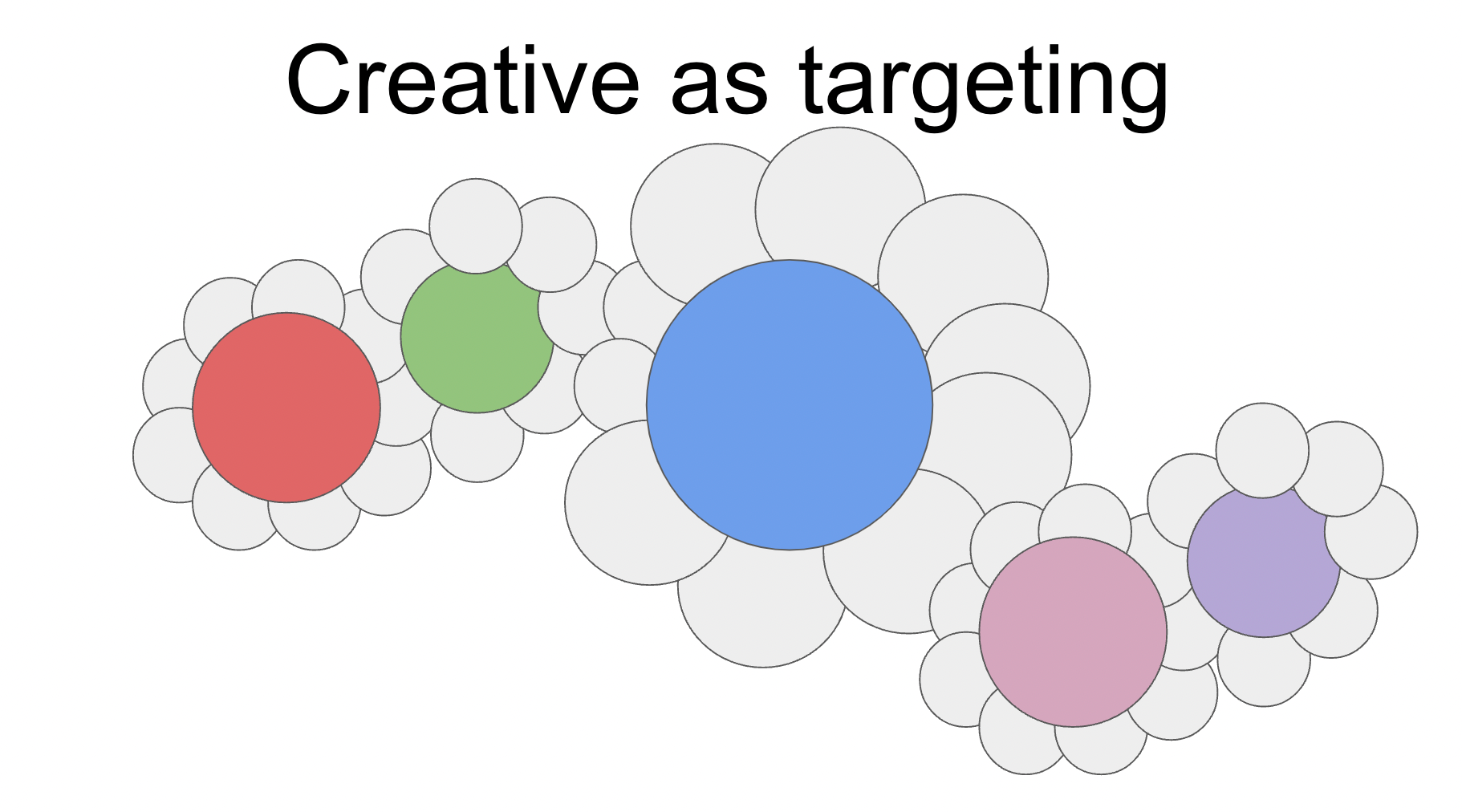
The Meta Game, in essence, is about how to navigate this graph, by mastering the levers and the risk/reward of navigating between audiences. The larger the audience, the more likely you are to have incredibly strong results (via lower CPMs, etc), but the gaps between larger audiences in the targeting graph are further apart, and thus larger conceptual changes are more likely to be unsuccessful.
Since the market is dynamic, and the levers are largely black-box, this is more of an art than a science, and the intuition of navigating big jumps for any product comes from getting repetition after repetition of navigating the smaller changes.
Copying competitors, and particularly copying the right creative from the right competitors, puts you in a strong starting position to navigate your way out of through iteration.
As you navigate competitor cloning, here are the 3 steps you should consider:
- Creative selection
- Reproducing according to product similarity
- Integrating winning components into internal strategy
Creative Selection
The ultimate purpose of cloning yourself into the most impactful local maximum (e.g. one of the big colored circles above), because it is likely going to be the pocket that creates the most growth and gives the longest runway for iterating out of and learning from before becoming fatigued.
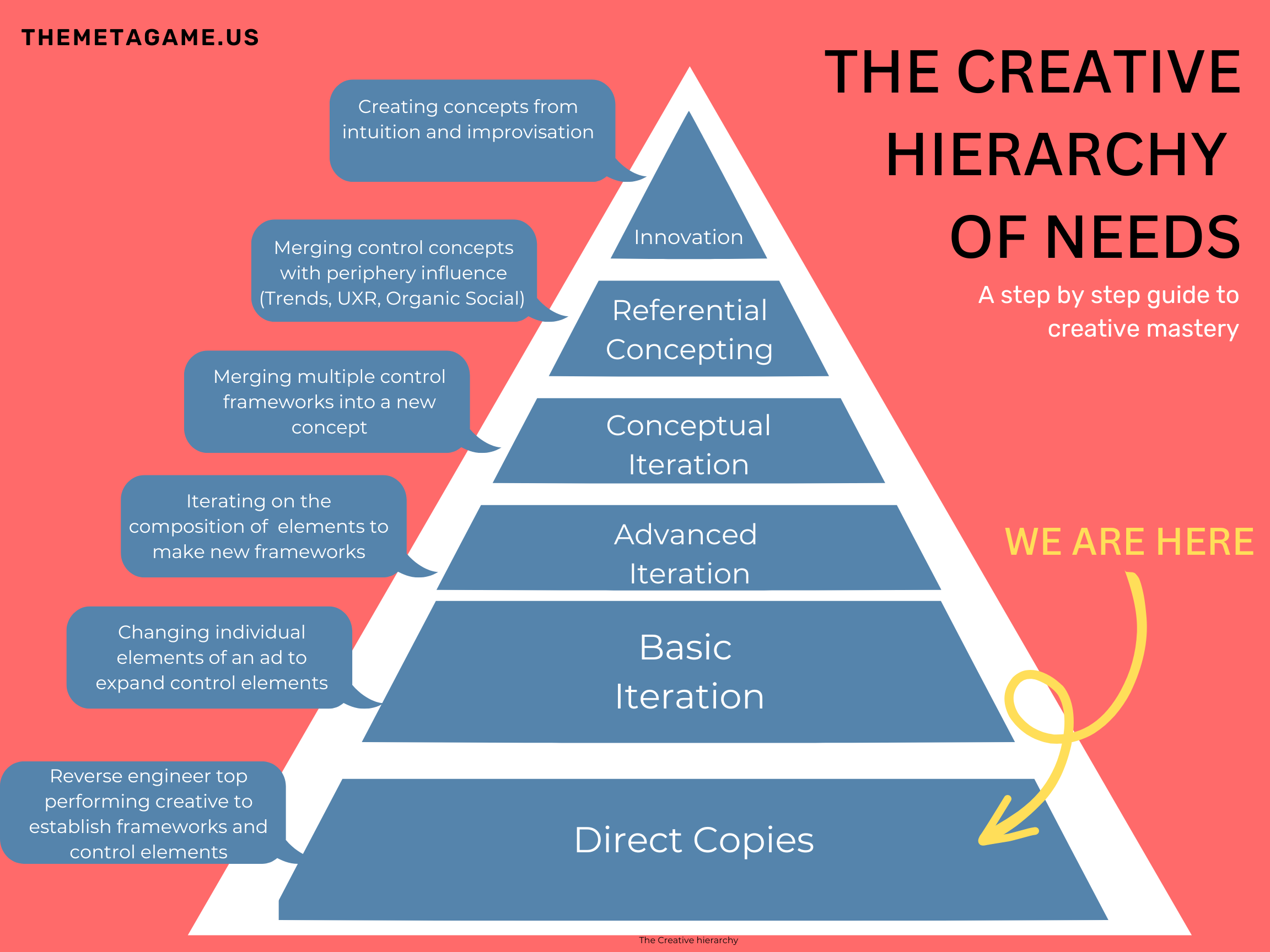
As a result, one of the most important skills when copying competitors is curation. Or, thought another way, gaining insight into the market sizing of any given idea. Referring back to the hierarchy of creative needs, this is like being a great DJ.
In a world of perfect information, for a well established product vertical, selecting creative to copy is pretty easy — you should choose what is currently driving the most growth in your category and sector and re-produce it exactly.
| Lever | Why it’s impactful | How to identify |
|---|---|---|
| High product similarity | Highest likelihood of targeting same audience and converting at same rate | break down of value propositions, product features, and monetization mechanics |
| High recency | Least likely to be fatigued, and still worth copying | App charts or ad analysis tools like sensor tower |
| Overall growth | More likely to be a large audience that can make substantial impact to CAC | ad analysis tools like sensor tower, or implied from facebook ads library |
However, it is not a world of perfect information, and products are rarely identical. As a result, here are some practical tips for selection:
Product similarity
If you are in an established category, there should be a one or more incumbents who have similar value propositions, product features, and monetization mechanics. These are usually the easiest to target.
For new categories of products, identify the relevant incumbents in the most relevant vertical, that share one or more of the above dimensions, and then adjust the creative as needed.
High recency
For products that rely on paid acquisition for growth, there is usually a strong relationship between creative performance and recent growth.
Hence, the two major areas to look for are overall volume to identify incumbents, and trending volume to identify disruptors.
For apps, App Annie and Sensortower offer free app charts for identifying incumbents.
The paid versions offer information such as growth rate and impression share on networks, and alerts can be set up to alert you of trending apps and creative.
Overall growth
Here are some of the tools I’ve used in the past to benchmark overall creative spend
| Service | Cost | Platform | Accuracy |
|---|---|---|---|
| Sensortower | Paid | app | directionally accurate |
| Pathmatics | Paid | web | innacurate |
| Facebook Ads Library | Free | web+app | Highly Accurate in EU |
| TikTok Ads Library | Free | web+app | No impression data |
From my perspective, the paid creative analysis tools are useful, but expensive (to the degree that they are inaccessible by smaller brands).
As a result, developing a sense for what is driving the most growth for a product either partially or wholly from the ads library is important.
Some tips are to identify the most recent concepts that are being iterated on in a number of dimensions (indicating overall strength). For products that run in many languages, seeing which ads are being translated is a directional sign of strength, as most creative teams only translate after a winner is found.
How to use Meta Ads Library for Tracking Competitors
Update: As of September, 2023, Meta has exposed all EU reach data for ads in the ads library. For worldwide products, this has essentially made competitor tracking free.
To use this:
1. Download AdScan.ai and Foreplay.co chrome extensions
2. Work through your favorite competitors Ads Libraries
3. Save top spending ads to Foreplay
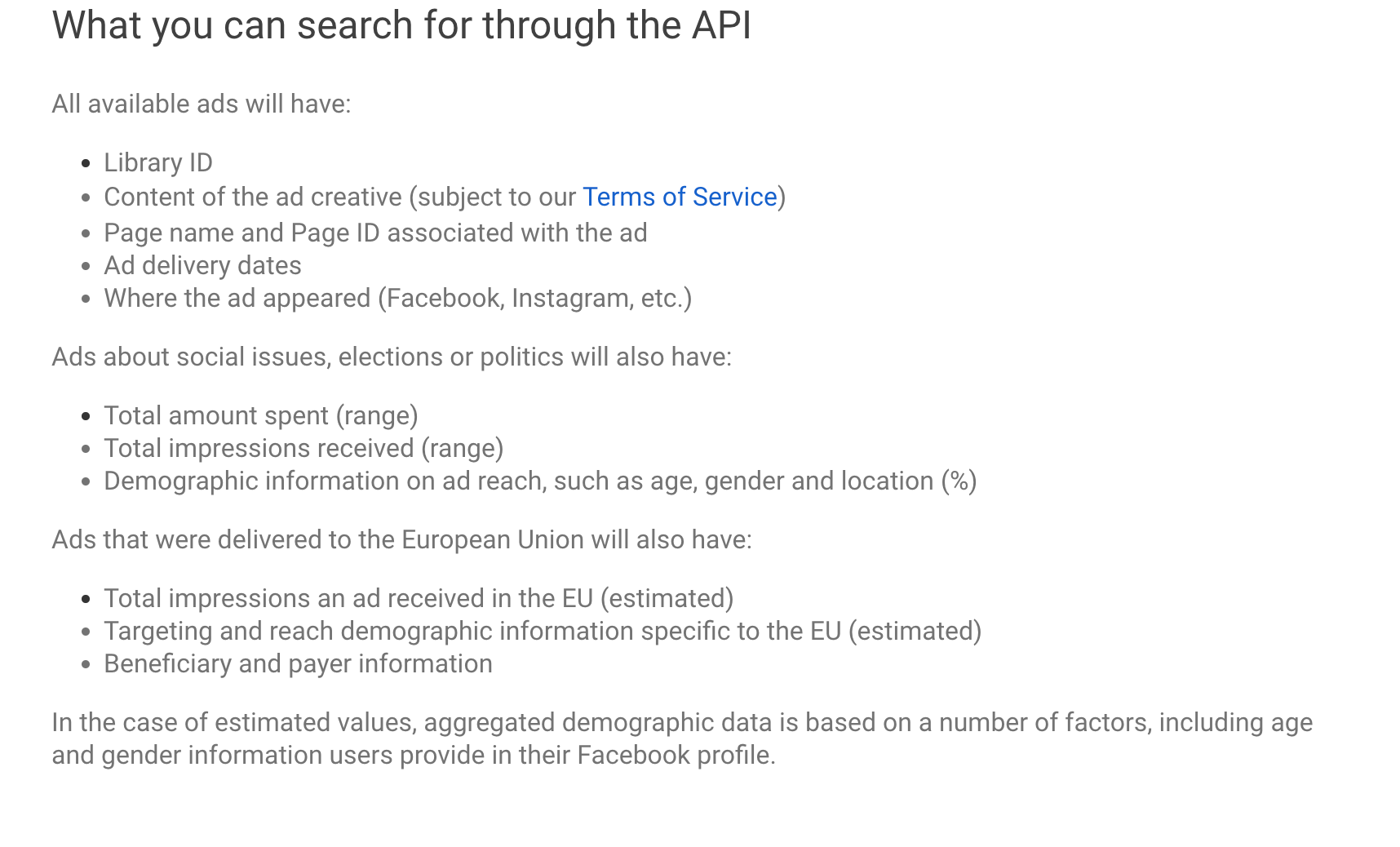
.... Or, if you are more technical, use the Ads Library API to do this programmatically
Some support
Given this world of imperfect information, self-curation of high performing ads is the key skill to develop, but getting started isn’t always straight forward or easy. As a result, I’ve created a curated database of high-performing creative strategies on Meta, that allows you to search by common product verticals and creative types, for easy inspiration to help you get started.
Breaking down the ad you have selected
Once you've picked the ad (or ads) you think are most impactful, the next step is an analysis and breakdown.
The reason for breaking down creative serves two purposes. The first is to prepare a brief for your creative team, but the second (and most important reason) is to learn.
As an example, let’s compare the breakdown for a product that is analyzing ads from Hims, a top performing men's health brand.
Let’s imagine this product is a business named Hommes, a French-Canadian brand that is reproducing the Hims business model in Canada, where Hims doesn’t have regulatory approval or operating proficiency.
As the first step, break down exactly what you see into it’s lowest level components — e.g. the visuals on the screen and the copy, in a frame-by-frame basis.
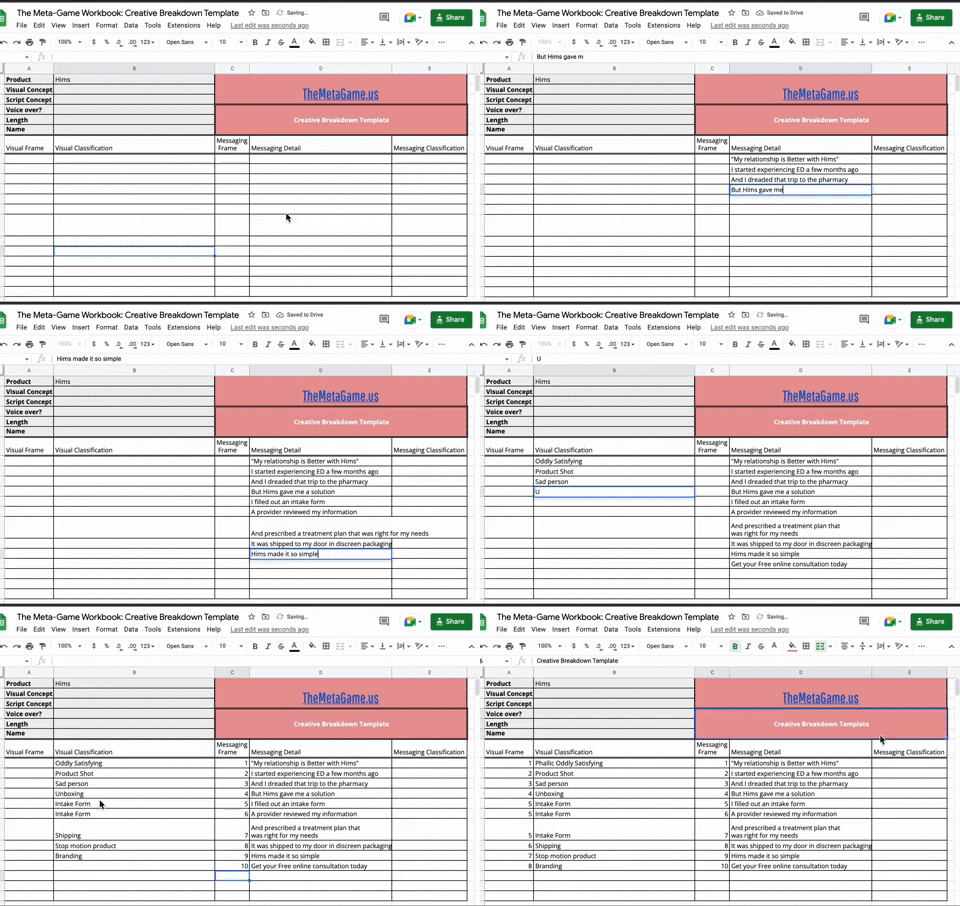
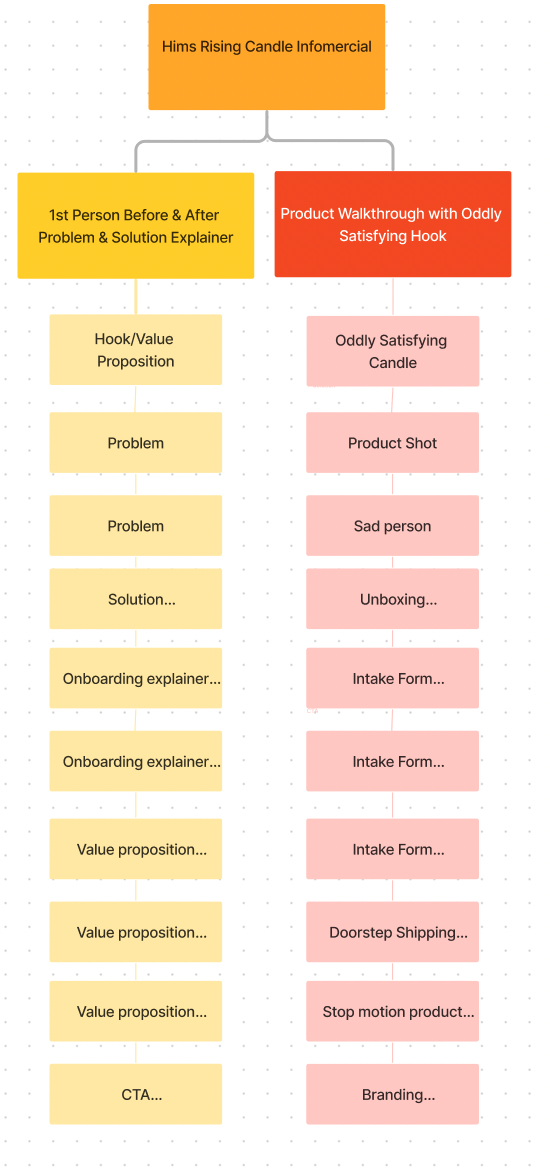
Then, do your best to start classifying what you’re seeing, first by each visual and copy element, and then aggregate and define those visual and copy sequences
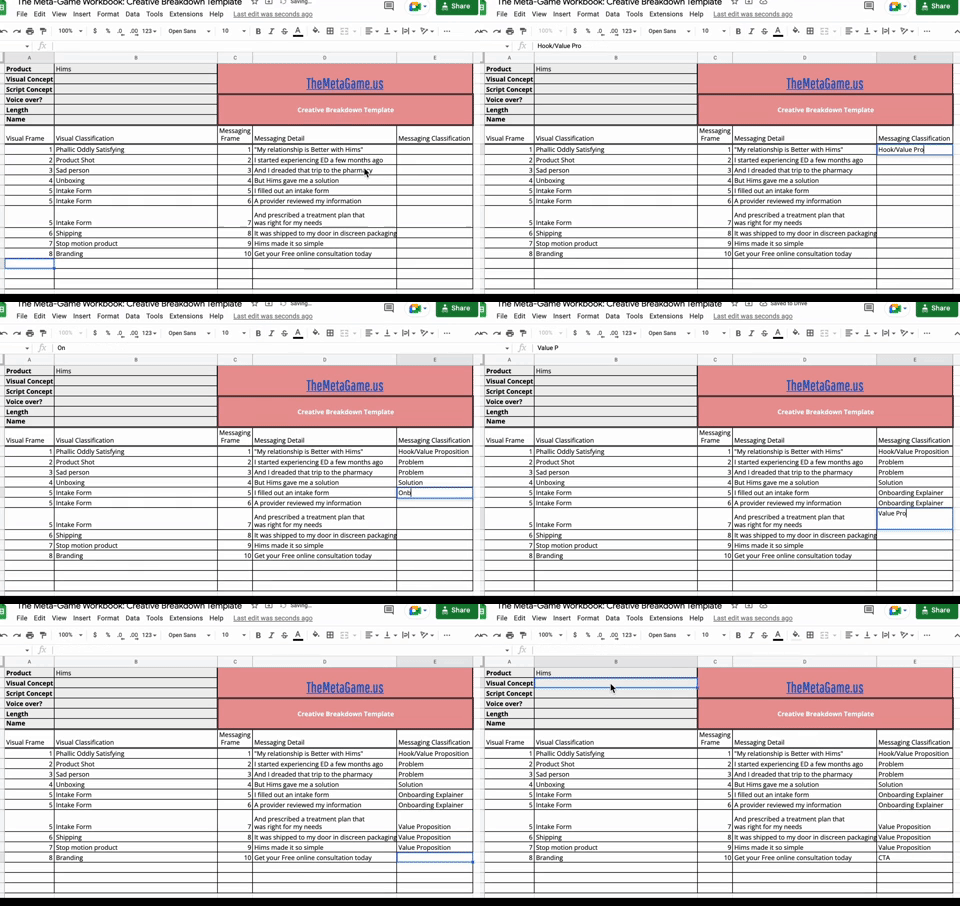
While blindly copying can create short term success, the breakdown is essential to develop a working understanding of what the levers are within the creative and a structure to build on top of. In creative strategy, the ad breakdown is the cornerstone of skills to practice, similar to playing scales in music, or warming up with layups in basketball — and something you should be practicing as often as possible (even on the creative I've produced, every year I do the exercise of breaking down the top 20 creatives of the previous year in order to refresh myself on what is driving the most success).
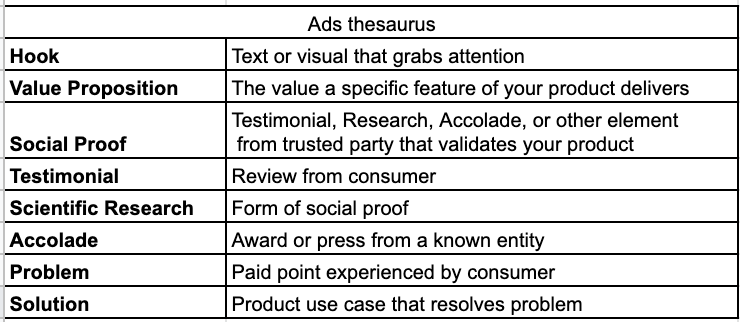
Your classification doesn’t need to be overthought or fit any specific mold, but developing a language is going to be important in how you think about creative and how you talk about it on your team.
Reproducing the ad you have selected
The similarity between your product and the product you’re copying, as well as your creative production capabilities is largely going to dictate to what degree you can copy.
For instance, if the ad in question is UGC, but you don’t have UGC capability, it’s going to be hard to reproduce. And if the ad you are copying is about shampoo, and you are a make-up brand, it would not make sense to talk about the benefits of cleaner hair. I intentionally selected this ad because it could be reproduced mainly with stock footage or low-lift resources and was an exact match to our theoretical product. But the reality is that products are rarely identical and production capabilities (like UGC, 3d, etc) are sometimes expensive and difficult to brief to the degree that you will need to make trade offs.
However by rule you should copy as much as possible for reasons stated previously in this article, or use as many control elements as possible if re-producing the visuals from the target brand is not possible (for instance, by using control visuals from your top performers and isolating the script).
On the ethics of copying
The ethics of copying are generally beyond the scope of this article but as a note, I don't think any moral argument can be made in favor of copying. Instead, there are simply levels that are easier to justify than others and times when I think it makes sense from a business perspective — primarily when the impact is to competitors and not creators, artists, your customers, or to those who are generally disempowered, and the intention is to learn.
In Review
| How to steal | How not to steal |
|---|---|
| First be shameless, copy top performing ads comprised of stock and boiler plate messaging exactly from your competitors | Make changes from the target creative without making a clone control(wherever possible) |
| Then be curious - Rigorously analyze and integrate working elements into your own program | Be lazy after stealing. If you’re going to steal, be pragmatic and make it worth it. |
| And then be innovative - combine with elements from other control concepts, to land into new territory | Copy artist, influencers, or other creators without permission or payment |
In the next post, we'll build on what we've done here, at the next level on the hierarchy of creative needs – the basic iteration – and start developing our "creative menu", which will help you to build an ads machine that can run at scale.