The Race to Zero & The Infinite Game: Thoughts on Copying and Collaboration, and the Re-opening of The Meta Game

Four years ago I wrote The Meta Game.
When I started the blog, the foundations of creative strategy were not well understood in the ecosystem. I wanted to create something that was useful to other people and that could help them get a start moving in the right direction. I was also starting out with freelance, and wanting to generate some goodwill for myself.
And it did. There are almost 500 creative strategists that have used The Meta Game to gain a foundational understanding of marketing to grow what became some of the top consumer apps – many of which I got to work with directly and whom I parlayed into clients for my agency, 10scale.co
But over the last couple years, the ecosystem has gotten out of control and extractive in two dimensions:
- how apps interact with the customer
- how apps interact with the broader creative ecosystem.
Sadly, too many of the culprits used The Meta Game to gain their marketing knowledge. While the blog had achieved it's intended goal, I didn't feel good about the impact to the broader ecosystem and 10 Scale was too often the target of mechanized copying – the ultimate irony of having taught others near me to do so.
Ultimately, I decided the blog had fulfilled it‘s purpose, and in March I pulled it.
Today I am re-releasing The Meta Game, both with some thoughts for consideration and a call to action.
The Race to Zero & The Infinite Game
We all operate in the ecosystem of transforming ideas and insights into winning ads.
There are an infinite number of ideas, but at any time only a set number of winning ads, of which are constantly being fatigued and depleted.
Every strategist, when trying to work against this fatigue, must consider whether to generate or copy a new winning ad.
Net contributors in the economy translate their your own ideas and insights into winning ads at a rate that is greater than the amount they copy. When participants (on average) are net contributors, the economy enters a generative state in which it grows, and in which copying becomes silent collaboration.
Net extractors in this economy take more than they create. When participants (on average) are copying more than they are contributing, the economy enters a suicidal state, where few ideas are spread between many participants. If there are too many extractors, copying accelerates this process — the expected value of generating new ideas gets smaller until all the contributors rationally decide no longer to participate.
The end state of this environment is a small group of extractors iterating on tired and old ideas until the ecosystem becomes stale and stagnant. It is, in essence, a race to zero.
In this sense, making selfish choices can become inadvertently self-harming.
As attractive as it is to take from others in order to find short term success, things tend to come full circle – either in regards to loss of faith from the consumer market, regulation by authorities, or by pushing away potential collaborators.
Whether it's the FTC's regulation of Genesis for dark subscription patterns (which ultimately got some major apps banned from Meta), the slow stagnation of individual app segments, or the severing of business relationships that were extractive – roughly a decade in the space has shown me the karma only takes time to work out and I am constantly taught to act with a higher level of integrity.
If the goal is long-term success, I challenge this group to consider two things:
- Are you a net contributor or a net extractor in this economy? Are you focusing more on competitive intelligence and competitor copies than you are copywriting, social listening, brain storming and exploring new ideas? How can you use your work as a platform for creation instead of extraction?
- How can you become hard to copy? what are the ways you can shape your product, onboarding, and ads so that others struggle to replicate your work and you can gain a lasting edge.
While I see copying as a useful tool for calibrating and understanding a market or bailing myself out in times of need, it's been my creative contributions and my unique edges that has continually opened up my world of professional collaborators and my skills – both of which have flowed to my income.
The Long Game
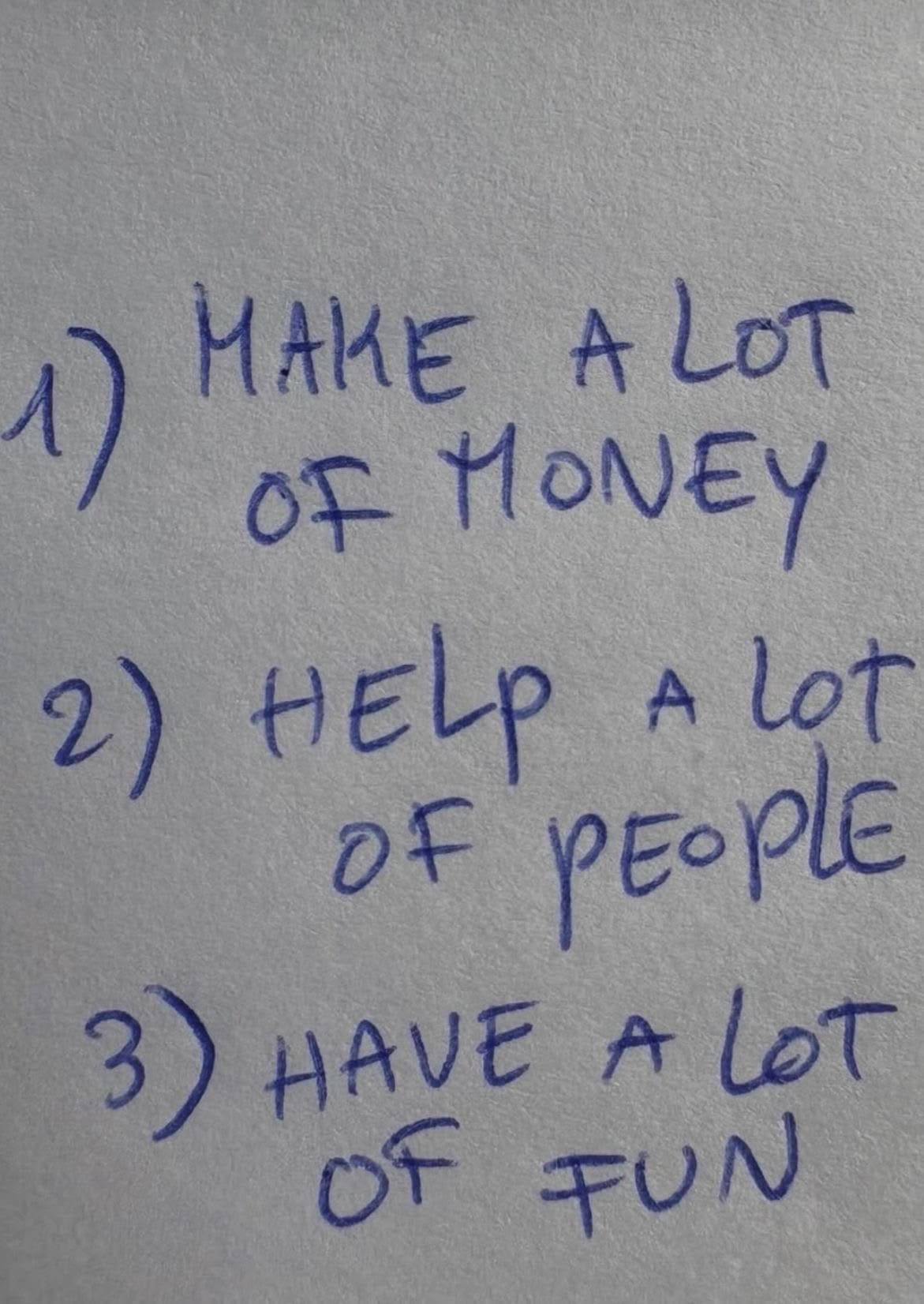
Over the last 3 years I have been building 10scale.co to help achieve a long-term vision of creating a collective where high performers have direct access to the fruits of their labor and can make a strong social impact.
The culture is intended to maximize personal creativity and agency, with a sense of collective ownership represented by a revenue share. The business is intended to support the healthy integration of technology and broader society.
Every business decision is framed around creating a long-term, abundant environment for elite strategists and designers that reaches those goals. Our employee retention is 100%, our 1 year client retention is 85%, and the median growth rate of our clients on Meta in their first year of working together is 5.4x.
We regularly create many of the most ground-breaking and culturally relevant ads in the market for amazing consumer products like: Finch, Rise Science, Imprint, Speak and Stasis.
Our business uses The Meta Game as the creative operating system, and right now we are looking for creative strategists to join the team. If The Meta Game has been useful to you, and you are interested in joining a team where you can hone life-changing professional skills and grow life-changing consumer products, please see here or reach out to nick@10scale.co.